No products in the cart.: AED 0.00

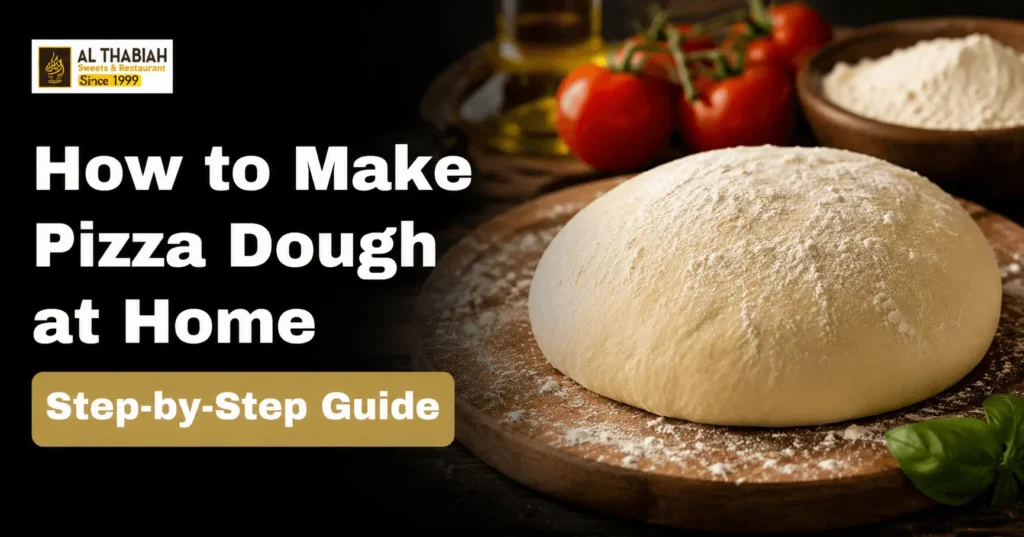
There’s something satisfying about pulling apart a piece of pizza and seeing that stretchy, slightly charred crust underneath the cheese. Store-bought bases can’t quite get there. The good news is that real pizza dough only needs four core ingredients, and the technique is far more forgiving than most recipes make it sound.
This guide walks through a dough that works reliably whether you’re baking in a home oven in Abu Dhabi, Dubai, or Sharjah — including the small adjustments that matter in a Gulf kitchen, like how air conditioning affects proofing and which flour actually holds up.
Ingredients (makes two 12-inch pizza bases):
That’s it. No milk, no eggs, no shortcuts needed. The flavor comes from a proper rise, not a long ingredient list.
A note on flour: Bread flour (higher protein, usually labeled 12–13% protein on UAE supermarket shelves) gives a chewier, crisper base with better structure. All-purpose flour still works and produces a softer crust — perfectly fine for a weeknight pizza. If you can only find one, don’t stress over it; the technique matters more than the brand.
Mix the lukewarm water with the sugar, then sprinkle the yeast on top. Let it sit for about 5–8 minutes until it turns foamy. If nothing happens after 10 minutes, the yeast is dead — start again with a fresh packet. This step alone prevents most dough failures.
In a large bowl, combine the flour and salt. Make a well in the centre, pour in the yeast mixture and olive oil, and stir until a shaggy dough forms. It should look rough and slightly sticky at this stage — that’s normal.
Turn the dough onto a lightly floured counter and knead for 8–10 minutes by hand, or 5 minutes with a stand mixer’s dough hook. You’re looking for a smooth, elastic ball that springs back gently when poked. If it’s still tearing rather than stretching, keep kneading; the gluten needs more development.
Place the dough in an oiled bowl, cover with a damp towel or cling film, and leave it somewhere warm for 1 to 1.5 hours, or until doubled in size.
This is the step that trips people up in the UAE. Most homes here run the AC constantly, and cool, dry air slows fermentation significantly. If your kitchen is cold, use the oven with just the light on (not the heat), or let the dough rise near a sunny window. In humid outdoor weather during winter months, a countertop rise works fine at normal speed.
Once doubled, gently press the air out and divide the dough into two equal balls for two medium pizzas, or keep it whole for one large one.
Rest the dough for 10 minutes before shaping — this relaxes the gluten and makes stretching much easier. Use your fingertips to press from the centre outward, leaving a slightly thicker rim for the crust. Avoid a rolling pin if you want that classic airy edge; stretching by hand keeps the air bubbles intact.
Preheat your oven as high as it will go — ideally 250°C (480°F) or higher — for at least 20 minutes before baking, with a pizza stone or upturned baking tray inside if you have one. Add your sauce and toppings, then bake for 8–12 minutes, until the crust is golden with a few dark blisters.
Bread flour with 12–13% protein content gives the best chew and structure, and it’s widely available at most UAE supermarkets. All-purpose flour is a fine substitute for a softer crust.
Yes — a self-rising flour and yogurt dough (roughly equal parts) makes a quick, no-rise base. It won’t have the same airy texture as a yeasted dough, but it’s a fast option on a busy evening.
Air conditioning keeps most UAE homes cooler and drier than a dough prefers. Move the bowl somewhere warmer — near a sunny window, inside an oven with only the light on, or on top of the fridge where it’s slightly warmer.
At room temperature, dough is best used within 2–3 hours after it has doubled. Beyond that, refrigerate it to slow fermentation and preserve texture.